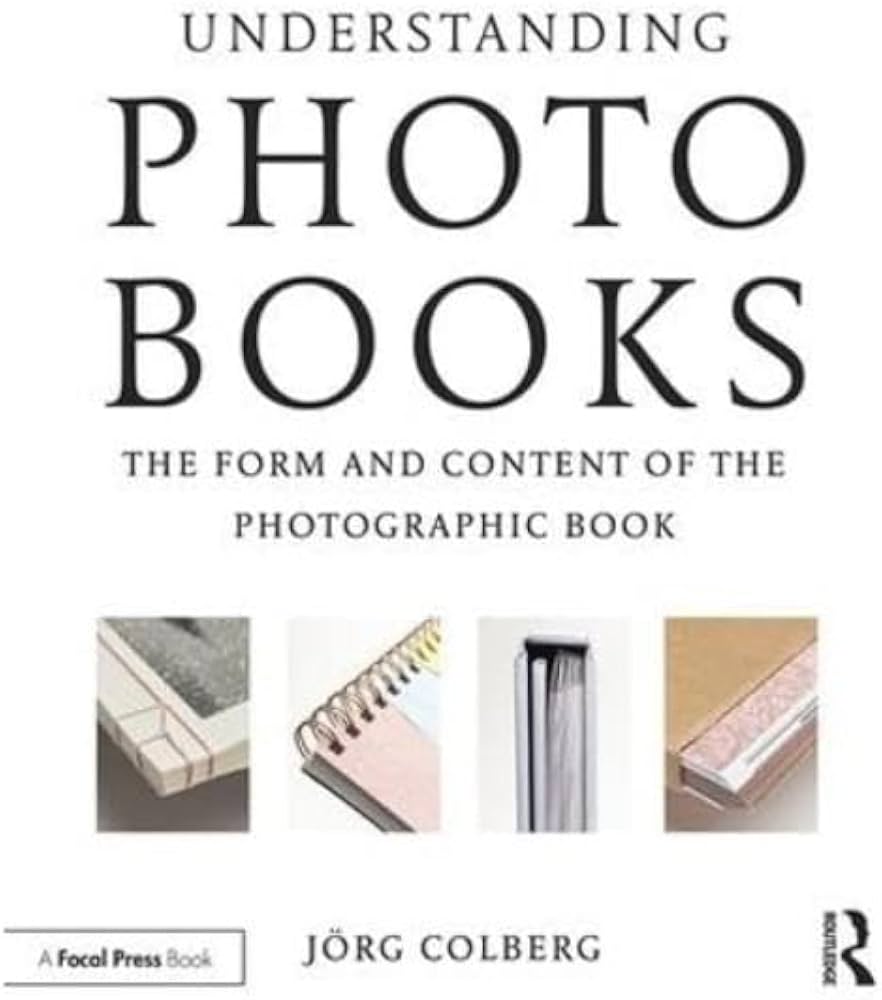
Jorg Colberg Understanding Photo Books(The Form And Content Of The Photographic Book)
Jorg Colberg Understanding Photo Books(The Form And Content Of The Photographic Book)
-
第 1 章:導論:什麼是攝影書? (Introduction: What Is a Photobook?)
- 界定攝影書與一般畫冊的差異。攝影書的藝術性在於透過影像的編排去傳遞特定概念,而不依賴大量文字。 [1]
- 第 2 章:攝影書:出版與市場 (The Photobook: Publishing and the Marketplace)
-
第 3 章:從照片到一本書:總體考量 (From Pictures to a Book: General Considerations)
- 引導讀者思考一本書的核心概念與轉化過程。 [1]
-
第 4 章:編輯與排序 (From Pictures to a Book: Editing and Sequencing)
- 本書的核心章節之一。講解如何篩選影像(Editing),以及如何透過不同的並置、節奏與序列(Sequencing),讓影像之間產生對話與敘事張力。
-
第 5 章:攝影書設計 (From Pictures to a Book: Photobook Design)
- 探討版面編排、字體選擇、留白(White space)的藝術。Colberg 強烈建議創作者應與專業設計師合作。 [1]
-
第 6 章:製作與印刷 (From Pictures to a Book: Production)
- 解構實體書的物理屬性,包括紙張材質(塗佈紙、美術紙)、裝訂方式(裸背、精裝、平裝)、印刷工藝等如何影響讀者的觸覺與心理體驗。 [1]
-
第 7 章:如何製作一本攝影書:17 條法則 (How to Make a Photobook (in 17 Rules))
- 由作者總結出 17 條極具操作性的金科玉律,為創作者提供清晰的檢視清單。 [1]
- 展覽與書籍的本質差異:Colberg 指出,展覽是暫時性、空間性且集體的體驗,觀者可以自由走動;而攝影書則是永久、私密且完全掌控在創作者敘事序列中的手持媒介。
- 編輯與排序決定成敗:好照片不等於好攝影書。一本書的成敗取決於照片之間的隱喻與視覺節奏(Sequencing)。
- 物質性的重要:紙張的重量、封面紋理、氣味甚至是翻頁的聲音,都是攝影書內容的一部分。避免低質量的數碼隨選印刷(Print on Demand),以免破壞作品的生命力。
- 精選案例研究(In Focus):書中特別穿插了五位當代攝影師的經典攝影書進行深度個案解構,包括 Laia Abril 的《The Epilogue》、Awoiska van der Molen 的《Sequester》以及 Mariela Sancari 的《Moisés》等,將理論具體化。 [1, 2, 3, 4]
Understanding Photobooks: The Form and Content of the Photographic Book is a professional guide written by Jörg Colberg, a well-known photography critic, writer and educator, and published by Routledge in 2016. [1]
This book is a practical tool book specially written for photographers, artists and photography book collectors. Jörg Colberg, as the influential founder of the influential Conscientious Photography Magazine and the instructor of the International Master of Photography (MFA) program at Hartford Art School, he deeply deconstructed the operating mechanism of "Photobook", an independent art medium, in his book. [ One, two]
The following is the core structure, chapter points and core views of this book for you:
📘 The core structure of books
This book regards photography books as an "organic whole", emphasizing that it is not just "printing photos on paper", but also a precise combination of image, concept, sorting, design and production technology. [1]
Chapter 1: Introduction: What is a photography book? (Introduction: What Is A Photobook?)
Define the difference between photography books and general albums. The artistry of photography books lies in conveying specific concepts through the arrangement of images without relying on a large number of words. [1]
Chapter 2: The Photobook: Publishing and the Marketplace
Discuss the publishing ecology, independent publishing, self-publishing and how to find a position between the market and the audience of contemporary photography books. [One, two]
Chapter 3: From Pictures to a Book: General Considerations
Guide readers to think about the core concept and transformation process of a book. [1]
Chapter 4: Editing and Sequencing (From Pictures to a Book: Editing and Sequencing)
One of the core chapters of this book. Explain how to screen images (Editing), and how to create dialogue and narrative tension between images through different converpositions, rhythms and sequences (Sequencing).
Chapter 5: From Pictures to a Book: Photobook Design
Discuss the art of layout arrangement, font selection and white space. Colberg strongly recommends that creators should work with professional designers. [1]
Chapter 6: Production and Printing (From Pictures to a Book: Production)
Deconstruct the physical attributes of physical books, including how the paper material (coated paper, art paper), binding method (bare back, hardcover, paperback), printing technology, etc. affect the reader's sense of touch and psychological experience. [1]
Chapter 7: How to Make a Photobook: 17 Rules (How to Make a Photobook (in 17 Rules))
The author summarizes 17 highly operational golden rules to provide creators with a clear list of views. [1]
💡 Summary of core views
The essential difference between exhibition and books: Colberg pointed out that exhibition is a temporary, spatial and collective experience, and the viewer can walk freely; while photographic books are permanent, private and fully controlled handheld media in the narrative sequence of creators.
Editing and sorting determine success or failure: good photos are not equal to good photography books. The success or failure of a book depends on the metaphor and visual rhythm (Sequencing) between photos.
Material importance: the weight of the paper, the texture of the cover, the smell and even the sound of turning the page are all part of the content of the photo book. Avoid low-quality digital print on demand so as not to destroy the vitality of the work.
Selected Case Studies (In Focus): The book is specially interspersed with classic photography books of five contemporary photographers for in-depth case deconstruction, including Laia Abril's "The Epilogue", Awoiska van der Molen's "Sequester" and Mariela Sancari's "Moisés", etc., which concretize the theory. [1,2,3,4]
This book is known as a must-read guide for contemporary photography creators and photography critics. It breaks the myth that the creation of photography books in the past can only be said and provides a clear analytical framework. [One, two]
庫存不足:剩餘 1 件
無法載入取貨服務供應情況